

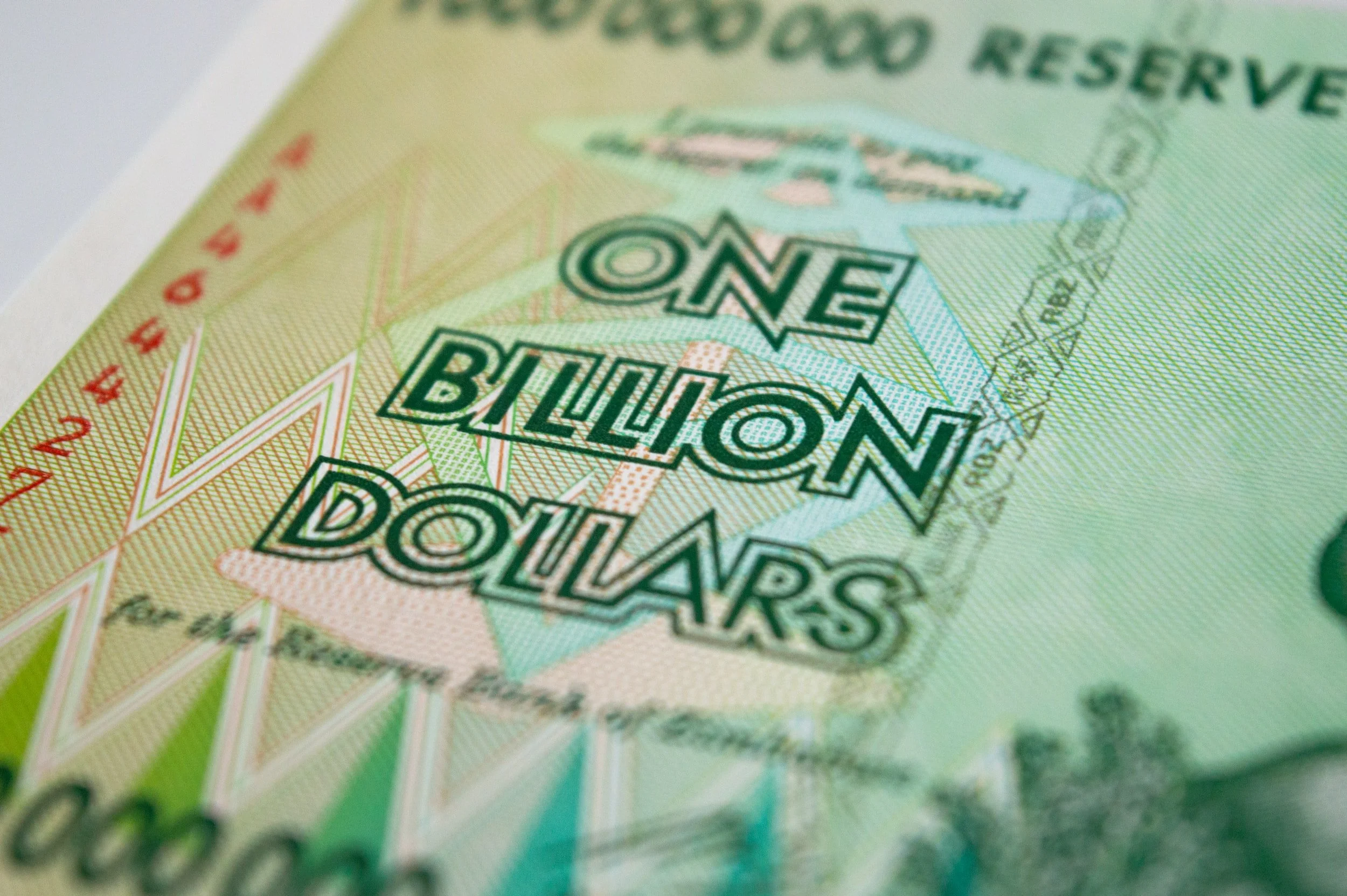
Hear that 7,567% crunching sound?
One year ago, rates were extremely low - as they had been since 2008, with the overnight SOFR at 0.03%. Today SOFR is 2.27% - a whopping 7,567% increase. All-in pricing for the most creditworthy borrowers is 2% - 4% higher than a year ago
Has John Paulson smashed his crystal ball on a pile of gold?
Credit Crunch Phase 1
The first phase of the credit crunch is rates and spreads increasing resulting in higher cost of borrowing. Liquidity abounds, but at a decidedly higher cost of capital, especially in the credit markets.
Part 1 of borrowing cost is the relevant index that rates are based on and all of the indices are higher now than a year ago.
A 7,567% increase – from 0.03 to 2.27
One year ago, rates were extremely low - as they had been since 2008, with the overnight SOFR at 0.03%. Today SOFR is 2.27% - a whopping 7,567% increase. All-in pricing for the most creditworthy borrowers is 2% - 4% higher than a year ago, the result of Fed actions to increase short-term rates and cool the economy, spreads widening with the cost of borrowing for lesser credit borrowers widening significantly over last year’s spreads. All interest rate indices have increased.
Part 2 of the borrowing cost is the spread the individual borrower is charged over the index and those spreads have widened – increasing by 25bp to 50bp for the most creditworthy borrowers to 200bp or more for lower quality borrowers. A year ago the most creditworthy borrowers might expect to pay 25bp-75bp over the relevant index with senior non-bank lenders in the 75bp-150bp range and junior lenders in the 150bp-200bp range, meaning there was very little risk premium in the market. Today the lower range of spreads is 50bp-125bp over the index for strong performing $50M EBITDA middle market companies and 300bp-400bp at the higher end for average performing $10M EBITDA middle market companies. The spreads have increased and risk premiums have returned.
Credit Crunch Phase 2
The second phase of a credit crunch is an increase in covenants, terms and conditions.
This takes many forms. Prime among them are higher cash flow to debt ratios and lower debt to equity requirements for new/renewing deals. Lenders want to see more cash flow cushion in monthly budgets simultaneous to the monthly borrowing cost increasing. It is a two-fanged viper. New deals see lower debt to cash flow ratios, higher debt yield covenants and higher equity requirements with lessened reliance on management roll and greater demand for cash equity.

Lenders want to see more cash flow cushion in monthly budgets simultaneous to the monthly borrowing cost increasing… It is a two-fanged viper!

John Paulson has smashed his crystal ball on a pile of gold…
Credit Crunch Phase 3
The third phase of the credit crunch is credit drying up.
We are at the stage where lenders do not yet know if we are heading into a recession-lite, The Great Recession Part Deux (or worse) or a small speed bump. During The Great Recession liquidity dried up seemingly overnight. Companies that had working capital lines drew them down fully if they could. Very quickly lenders started cancelling credit facilities of all types, calling existing loans and not renewing outstanding balances on even performing matured loans. Hard money lenders, the lenders of last resort, affectionately referred to as vultures in the industry, were the only option for many.
Credit will become increasingly less available over time until a clear direction for the economy and that is because markets, lenders in particular, hate uncertainty, and...
Uncertainty reigns. Markets generally abhor VUCA = Volatility Uncertainty Complexity Ambiguity. But that is exactly where we are today. Bankers who can sleep at night wake up fearing the morning financial press headlines. They wilt at the thought of Fed Chair Jerome Powell giving a speech at some college where he might announce MF LRI, many future larger rate increases. They tremble as they scour the markets for any early warning sign of defaults or regional instability or supply chain disruptions or their shadow unexpectedly appearing on the ground beside them, a fresh batch of Ursula’s poor unfortunate souls.
This is where having a really good crystal ball pays off. John Paulson smashed his on a pile of gold after personally making $4B on the 2008 housing market crash, leaving us all in the same predicament: guessing for now and saying with hindsight in a year “I should have known that was going to happen”.
What do I do today? Buckle in, build cash supplies and if you are thinking that you want to sell your business in the next few years, act quickly or plan to wait it out. Vertical Capital Advisors will debut a new valuation tool this month that will enable us to provide anything from a quick snapshot to a comprehensive analysis of your company’s current value. There is still a record amount of debt and equity capital available but multiples have softened this year so don’t wait too long if you are serious about exploring a possible sale.

TINA is an acronym for “there is no alternative”. We blogged about it in August 2016 and although we have had a world of changes since then, the fact remains that there is no alternative to low yields now just as there was no alternative then
Tina’s Back…
I know you think you understand what you thought I said
Vertical Capital Advisors Blog
March 3, 2021
Actually, TINA never left. TINA is an acronym for “there is no alternative”. We blogged about it in August 2016 and although we have had a world of changes since then, the fact remains that there is no alternative to low yields now just as there was no alternative then and, according to Fed Chair Jerome Powell, there will be no alternative for years to come. The Fed minutes from their September meeting revealed their position to “keep interest rates near zero until 2023”, a far cry from the days of Fed Chair Alan Greenspan who famously said “I know you think you understand what you thought I said but I'm not sure you realize that what you heard is not what I meant” and “I guess I should warn you, if I turn out to be particularly clear, you’ve probably misunderstood what I said.”

With Congress and the U.S. Treasury adding trillions of dollars to the existing supply and the Fed pumping trillions of dollars into the economy, economists are left scratching their heads about inflation or the lack of inflation more precisely.It seems much of the flow of funds has gone into global stock markets, propelling them to the greatest highs ever with the total market capitalization of the U.S. stock market surging 34.8% to nearly $51 trillion as of December 31, 2020, total U.S. household assets topping $140 trillion and total U.S. household net worth reaching nearly $124 trillion.
This month we will enter the second year of the recovery, a year where the markets typically experience a temporary 10% pullback but end the year 10% higher.
With the Fed, Treasury and Congress cheerleading expansionary economic policies, at least for the next three years, we are likely to see continued growth in the value of financial assets and real estate assets meaning smooth sailing ahead – unless…
* * *
ABOUT VERTICAL CAPITAL ADVISORS
Vertical Capital Advisors is an Atlanta-area boutique investment banking firm built on creating tangible value for our clients, serving clients in just about every industry. Our clients are both capital growers and capital allocators. How can Vertical help your firm maximize value?
Joe Briner
Managing Director
Vertical Capital Advisors LLC
briner@verticalcapitaladvisors.com
866-912-9543 ext 108
678-591-0273

Why the rollercoaster market?
Why is the market so volatile? What’s going on?
Why is every day like Mr. Toad’s Wild Ride? Might be the Night of the Long Knives…
Yes, it seems that Mr. Toad grabbed the controls on October 1, taking the market on a wild ride. Take a look at the S&P 500 performance over the last six months and you will see plenty of peaks and valleys.
I read an article recently that blamed the volatility on weak corporate earnings. I had to investigate. I have to admit I did not know the relative strength of corporate earnings right now but that explanation just did not ring true to me. It turns out, nothing could be farther from the truth. Corporate earnings are literally the strongest they have ever been! EVER!
So what in the world is going on? Why is the market so volatile?
Download the full post below - and let me know what you think!